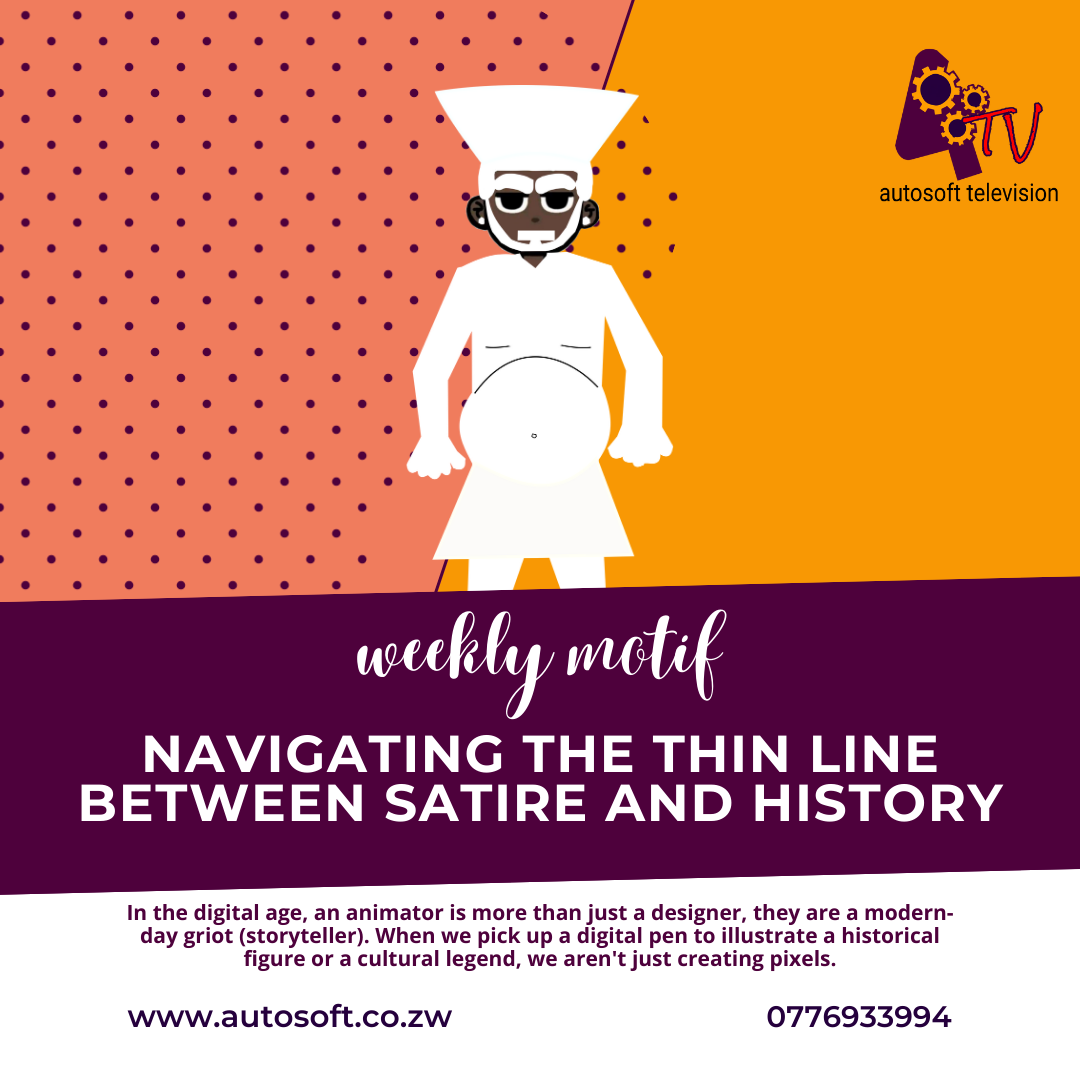
The Weekly Motif: The Artist’s Responsibility: Navigating the Thin Line Between Satire and History
🎨 The Weekly Motif: The Artist’s Responsibility: Navigating the Thin Line Between Satire and History
In the digital age, an animator is more than just a designer, they are a modern-day griot (storyteller). When we pick up a digital pen to illustrate a historical figure or a cultural legend, we aren’t just creating pixels. We are shaping how a new generation perceives its heritage. This week at The Weekly Motif, we’re diving into the heavy lifting behind the "Sugar Heist" project and why context is the most important tool in a designer’s kit. watch part 1 : sugar heist 1 (https://youtu.be/c8dVCFG0X3o?si=-OBdY_hbJImITh7F)
1. The Power of the "Visual Reframe"
As we discussed in our previous motif article on the "5-Second Summary," the brain processes images 60,000 times faster than text. This means that if an artist draws a historical figure disrespectfully, that image can do more damage in 5 seconds than a 500-page history book can fix.
The Strategy: For projects like "Sugar Heist," the goal isn’t to mock history, but to visualize the myth. By using a specific art style—satirical, vibrant, and clearly "cartoonish"—we signal to the viewer’s brain: "This is folklore, not a textbook." This is what we call Visual Disclaimer.
2. Satire as a Tool for Conversation, Not Conflict
Satire is a surgical tool. In the hands of a professional, it can be used to explore why certain urban legends (like the "Sugar story") persist in our culture.
| Feature | Malicious Mockery | Professional Satire (The Autosoft Way) |
| Intent | To ridicule or diminish a person/group. | To explore a cultural narrative or myth. |
| Visual Tone | Grotesque or insulting caricatures. | High-quality, expressive, and thought-provoking. |
| Context | Presented as "Fact" or "Truth." | Presented as "Legend," "Folklore," or "Satire." |
3. Protecting the Brand and the Story
Every creator in 2025 knows that the digital landscape is sensitive. To move from being a "hobbyist" to a "professional studio," you must implement Content Safeguards.
Framing: We frame stories like "Sugar Heist" as an exploration of why people tell these jokes, rather than the joke itself.
Disclaimers: Transparency builds trust. Telling your audience exactly what they are watching protects the brand from being misinterpreted.
Cultural Respect: We honor the importance of King Lobengula by ensuring the animation focuses on the absurdity of the colonial deception rather than making the monarch the punchline.
Master Your Narrative with Autosoft
Whether you are launching a satirical series like "Sugar Heist" or a high-stakes corporate brand, how you frame your story determines your success.
the brain processes images 60,000 times faster than text. This means that if an artist draws a historical figure disrespectfully, that image can do more damage in 5 seconds than a 500-page history book can fix.
At Autosoft (www.autosoft.co.zw), we don’t just provide animation and design; we provide Creative Strategy. We understand the cultural landscape of Zimbabwe and the digital landscape of the world.
Need to tell a complex brand story without being misunderstood? Our Visual Strategy team is here to help.
Want to turn local folklore into a professional animated IP? Our Video Production & Animation studio handles everything from script to screen.
Looking to build a digital presence that commands respect? Explore our Web Development and SEO services.
Don’t just post content. Craft a legacy. Partner with Autosoft today.